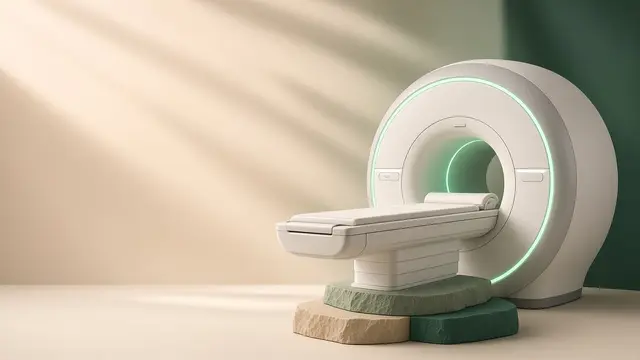
What it is
A screening MRI uses a strong magnet and radio waves, not X-rays, to image the brain, neck, chest, abdomen, pelvis and often the spine in one visit. Consumer brands sell it in tiers: a shorter torso-only scan, and a longer head-to-pelvis scan with spine. Most screening protocols do not use contrast dye.
What to expect
- Online booking, no doctor’s referral at most consumer brands (their own physicians order the scan).
- A safety questionnaire about metal implants, pacemakers, claustrophobia and pregnancy.
- About 30–60 minutes lying still inside the scanner, depending on the tier. It is loud, so you get ear protection.
- A radiologist’s report a few days to two weeks later, usually with a results call. Ask whether that call is included.
What the evidence says
- No major US medical society recommends whole-body MRI screening for average-risk adults without symptoms. The American College of Radiology says there is not enough evidence that it saves lives or is cost-effective.
- A 2019 review of 12 studies (5,373 people without symptoms) found that about one in three scans showed a “critical” or “indeterminate” incidental finding. Many of those needed more tests to sort out, and most proved harmless.
- MRI does have a clearer role for some people at high genetic risk, such as those with Li-Fraumeni syndrome, under a specialist’s care.
- MRI is not a good screen for lung cancer, colon polyps or breast cancer, which have their own proven tests (low-dose CT for heavy smokers, colonoscopy or stool tests, mammography).
What it costs
Cash prices we found range from about $900 for a torso-only scan to $2,500 for a head-to-pelvis scan with spine at the best-known brands (list prices; holiday discounts are common). Independent imaging centers sometimes sell a basic body MRI for less.
Who it may suit, and who should skip it
May suit: People who understand the trade-off and can afford follow-up tests, people with a family history that worries them (ideally after talking to a doctor or genetic counselor), and anyone building a baseline they plan to compare against later.
Skip it or ask a doctor first: Anyone with an MRI-incompatible implant, people who would be badly shaken by an ambiguous finding, and anyone using it in place of the screening tests their doctor already recommends.
Questions to ask before you book
- Which body areas does this tier actually cover, and which does it not (lungs, colon, breast)?
- Who reads the scan, and are they board-certified radiologists?
- Is a results consultation included, and what happens if something incidental is found?
- Do you give me the images and the full report?
Common questions
Is a full-body MRI worth it?
It depends on what you want from it. It can find some serious problems early, but there is no evidence yet that screening healthy people with it saves lives, and about a third of scans show something that needs a closer look. Think of it as an expensive baseline, not a clean bill of health.
Does a full-body MRI use radiation?
No. MRI uses magnets and radio waves. That is the main difference from a full-body CT scan, which uses ionizing radiation and which the FDA does not recommend for screening healthy people.
How much does a full-body MRI cost?
Published cash prices at the major brands run from about $900 to $2,500 depending on how much of the body is covered. Insurance almost never pays for screening scans, but many brands accept HSA or FSA funds.
Sources
- American College of Radiology: statement on screening total-body MRI
- Kwee & Kwee, J Magn Reson Imaging 2019: whole-body MRI screening, systematic review
- RadiologyInfo (ACR/RSNA): MRI of the body
- FDA: Full-body CT scans, what you need to know
Written by the Healthspan Map editorial team from the sources above and checked Nov 2026. This is general information, not medical advice. Talk to a licensed clinician before starting anything new, especially if you are pregnant or have a medical condition. See our editorial policy.