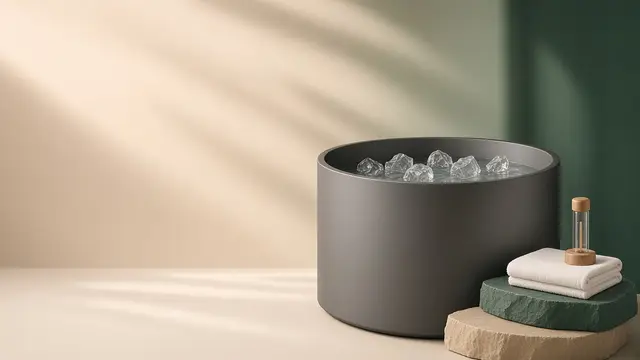
What it is
Cold-water immersion means sitting in water usually between about 4°C and 15°C (39–59°F), up to the neck, for anywhere from 30 seconds to a few minutes. Recovery studios, bathhouses and some clinics offer chilled tubs, often next to a sauna for “contrast therapy”.
What to expect
- Get in slowly and focus on long, steady exhales. The gasp reflex passes after 30–60 seconds.
- First-timers often start with 1–2 minutes at the warmer end of the range.
- Never plunge alone, after alcohol, or with your head under water.
- Warm up naturally afterwards by moving around; a warm shower is fine.
What the evidence says
- A 2016 meta-analysis of nine trials found that cold-water immersion after exercise eased muscle soreness slightly more than resting, with the best results at about 11–15°C (52–59°F) for 11–15 minutes (Machado et al.).
- Plunging right after strength training may blunt muscle growth: in one trial, men who used cold water after workouts for 12 weeks gained less muscle and strength than those who did an active cool-down (Roberts et al., 2015).
- The widely shared “11 minutes of cold a week” comes from a small Copenhagen study describing what experienced winter swimmers did (Søberg et al., 2021). It describes their habit; it was not tested as a prescription.
- Cold shock raises heart rate and blood pressure sharply, which is a real risk for people with heart disease.
What it costs
At recovery studios and bathhouses, cold plunges are usually bundled with sauna access or a membership rather than sold alone.
Who it may suit, and who should skip it
May suit: Healthy adults who want an alertness and mood boost, athletes managing soreness between hard sessions, and sauna-goers who enjoy contrast therapy.
Skip it or ask a doctor first: People with heart disease, high blood pressure, Raynaud’s or cold urticaria, and anyone pregnant, unless their doctor agrees. If muscle gain is the goal, do not plunge right after lifting.
Questions to ask before you book
- What temperature is the water kept at, and how is it filtered and sanitized?
- Is staff nearby during plunges?
- Is the plunge included with sauna access or a membership?
Common questions
How long should you stay in a cold plunge?
Most people do 1–5 minutes. The soreness research that showed a benefit used about 11–15 minutes at a milder 11–15°C. Colder water calls for shorter sessions.
Is a cold plunge good after a workout?
After hard endurance or team-sport sessions it can ease soreness a little. Right after strength training it may reduce muscle gains, so many people plunge on rest days or several hours later.
Is cold plunging safe?
For most healthy adults, yes, with sensible limits. The cold-shock response is risky for people with heart disease. Never plunge alone or after drinking.
Sources
- Machado et al., Sports Medicine 2016: cold-water immersion, temperature and time
- Roberts et al., Journal of Physiology 2015: cold-water immersion and strength-training adaptations
- Søberg et al., Cell Reports Medicine 2021: winter-swimming men and brown fat
Written by the Healthspan Map editorial team from the sources above and checked Nov 2026. This is general information, not medical advice. Talk to a licensed clinician before starting anything new, especially if you are pregnant or have a medical condition. See our editorial policy.